
Yogasanas and the Science of Stretching
- suchindra potnis
- Mar 9, 2024
- 6 min read

A blog / report written while doing my teacher training program in Sep 2023
Problem Statement: Was always keen to understand the reasons and the possible solutions for so many mid aged women and men being so physically inflexible. The reasons became obvious quickly. A largely sedentary life and the very steadily increasing weight. Another reason was their refusal to acknowledge that a “In Control” annual blood report meant nothing from their long-term fitness perspective. The solutions were not so obvious. They had to be solutions which were effective and sustainable.
Why Flexibility: Flexibility has always been underrated because the benefits are known only at an age when you suddenly realise your neck does not move enough to the right, when you realise its increasingly getting difficult to bend down in the bathroom to pick up a fallen soap, under a shower. It becomes even more obvious when the said person slips, falls, sprains her/his hips or even worse, breaks a hip.
For Whom: The 35-50 age group. A few people close to me influenced me to look at this. An extremely fit friend of mine with no medical issues could not pick up a fallen spoon from a table. After observing a few more of the “fit” lot, realised this was an issue with 50-60% of the people in this age group, fit or unfit. My uncle who has rarely visited a doctor in his 75 years, with a BMI of 20, broke his right hip, followed by his left hip within 1 year of each other. Most people in this age group do not think it is important to be flexible.
Why Yoga Asanas: COVID implied I had a lot more time to read, study and analyse the various methods available. Fresh from a very effective 5 day a week power yoga asana practise for a year, I leaned towards yoga. Looked around for solutions on the net with the focus of solutions being sustainable and long lasting.
Traditional Approach: After speaking to multiple fellow students in yoga asana, I concluded that the traditional yoga asana approach would impart flexibility but students would need to invest in a minimum of 5-6 days a week and would need to do it at least for an hour a day.
Option Selected: There were clearly 4 broad areas (hips, hamstrings, back and shoulders) which I wanted to focus on. After researching on the web, decided to try the solution approach from YogaBody. They had a solution focused around targeted stretching, through yoga asanas of the areas I had identified and a few more. Went through an initial 1-week (12 hour) course
Process followed: Found the process very logical and initially I tried this on self. They worked well for an already flexible body like mine. Decided to enrol for a formal certified stretching coach course where the finer nuances of the practises were exposed to me. After the certification, started training my friends and family in late 2021. I had been teaching all of them Asanas since the past two years. I already knew what they were capable of and their limitations. Also, recently started taking online training for a few clients, primarily people who I know. Created mini brochures for each of them and followed a process of personally training each of them on the finer aspects of holding the poses. Have seen benefits in terms of flexibility improvement in all of them irrespective of body type, sex, or geography. Its early, but the generally feeling I get is that this flexibility will be long lasting. Muscle memory helps!
How is this done: Refer sample schedules made for clients of mine with specific body challenges. Most of these poses are relatively simple, held in a comfortable stretch over a time period of 2-5 minutes. All of these are to be held in a specific breathing pattern (breath-in through the nose {4 counts} and breathe out through the mouth {8 counts} in Ujjayi breath. It is important to guide them through the process. I have kept the session between 40-45 minutes, which beats the psychological one-hour class barrier.
The science behind this program: The science is taken from the basics of Hath and Yin yoga. If muscles are stretched in a relaxed state and are stretched for a extended period (of at least 2 minutes), there is significant benefit to people using this technique. This activates the para sympathetic nervous system and helps not only in relaxation but also improves the ability of the person to hold the pose for a longer time, imparting significant benefits. The study from Yogabody talks about a optimum duration of 2-5 minutes, after which the incremental benefit diminishes with increased hold time. Best time to do this, is just before sleep in the night. Though they can be done in the mornings as well
What I want to do from here: My aim is to create personalised programs for the 35-50 category in either groups of 1, 2 or a max of 4 people in a group and impart these programs on a regular basis, preferably face to face. One of the important reasons to come to YogaPoint is to understand the nuances of traditional yoga asanas better and to increase my knowledge around anatomy and physiology. I intend to introduce additional asanas poses to help in the process of flexibility, especially for hips (which I have identified as the no.1 inflexibility problem amongst this age group). Am also hoping to spend time with Gandhar, Kate and Pramod on this program and which asanas could I add to in my program.
Below are a couple of schedules I had made for 2 of my students.
Targeted Hip and lower body opening Schedule
Suggested Period: 10 sessions of 40–45-minute each.
Each session will have a short dynamic warm up, followed by long hold of specific yoga poses. All the poses will be targeted towards lower body mobility. The target holds for each pose will be between 2 and 4 minutes. Three principles to be followed for each of these poses.
1. To relax the body completely. (Body stretches the best when its relaxed)
2. To use Ujjayi breath (Breathe through the nose for a count of 4 and breathe out through the mouth to a count of 8
3. To target a specific time and either meet the target or beat it
A few of them listed below. These would change depending on what works the best for you

Suggested Frequency: Start with 2 days a week, first two weeks and then do 1 session a week for the next 6 weeks.
Suggested time of the sessions: Morning or evening. 2100 ET (630 IST) or 0700 ET (1630 IST)
Targeted Hip and shoulder release exercises
Objective:
1. Increase the range of motion of your neck.
2. Increase flexibility of your hips
Frequency : Thrice a week : 40-45 minutes each
Warm ups (10 Minutes)
· Neck Rotations
· Neck side to side
· Neck up and down
· 3 sets of Suryanamskars
Exercises (All to be done only once). Thrice a week
1. For the Shoulders: (15-18 Mins)
a. Exercise 1 : Adho Mukha Svanasana (AMS) Variation
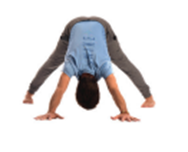
Start with a 60 seconds hold. To be extended to 3 minutes over a month
b. Exercise 2 : Wall Stretch : Cliffhanger

Start with a 30 seconds hold. To be extended to 2 minutes over a month
c. Exercise 3 : Crossed Hands Shoulder Stretch

Start with a 1.5 Minute hold. To be extended to 3 minutes over a month
d. Exercise 4 : Gomukhasana


Start with a 1.5 Minute hold. To be extended to 3 minutes over a month. Use a towel if hands don’t touch
2. For the Hips (12-15 minutes)
a. Exercise 1 : Utthita Pristhasana

Start with a 2 Minute hold each side. To be extended to 3 minutes over a month
b. Exercise 2 : Badha Konasana : Butterfly pose

Start with a 2 Minute hold. To be extended to 3 minutes over a month. Sit on a pillow if uncomfortable
c. Exercise 3 : Agnistambhasana : Double Pigeon pose

Start with a 1.5 Minute hold. To be extended to 3 minutes over a month